

Ask ten practice owners to name the best EHR for a new practice and you will get ten different answers. That is not because nine of them are wrong. It is because the question itself is incomplete. The best EHR for a new practice depends on your specialty, your billing model, your budget, and how much administrative support you will have on day one. A system that works beautifully for a four provider orthopedic group can bury a solo psychiatric nurse practitioner in features she will never use and fees she cannot absorb.
So this article is not a ranking. Vendor rankings age quickly, and many of the lists online are shaped by affiliate relationships rather than clinical reality. Instead, I want to give you the framework we use inside Practice Launch 90 when we guide clinicians through EHR selection for a new practice. Learn to run this evaluation yourself and you can repeat it in five years when your needs change.
Most clinicians begin by searching for a ranked list and booking demos with the top three names. I understand the instinct, but review sites are often funded by the vendors they rank, and demos are built to impress rather than to reveal. When a clinician asks me to name the best EHR for a new practice, I answer with questions of my own. What do your notes need to look like: therapy narratives, procedure documentation, or quick medication follow ups? Will you be in network with payers, fully self pay, or somewhere in between? Who is doing your billing? Once those answers are on the table, the field usually narrows from thirty products to three or four, and the best EHR for a new practice will be the one that scores highest on the five questions below.
The advertised subscription is only the visible part of the cost. Ask each vendor to put the full picture in writing: implementation and training fees, data migration charges, interface fees for labs, electronic prescribing, and the clearinghouse, and the price of every module you will actually need, such as telehealth, the patient portal, and appointment reminders. Some platforms charge a flat monthly fee per provider; others charge a percentage of collections with a monthly minimum. Build a three year total cost for each finalist rather than comparing month one prices. If a vendor will not give you a complete written quote, that tells you something useful too.
Medical billing setup for a new practice is one of the most common places a launch stalls, and your EHR choice shapes it more than almost anything else. Ask whether eligibility checks, claim scrubbing, remittance posting, and denial worklists live in the same database as your clinical documentation, or run through a partner product that was bolted on later. Two systems means two support queues and a gap in the middle where claims can quietly sit. How to set up billing for a new clinic also looks completely different depending on whether the platform expects in house billing, an outside billing company, or a billing service of its own. Some newer platforms, Panova among them, combine the software and the billing operation under one roof; if you evaluate that model, apply the same five questions rather than taking any vendor’s word for it, mine included. Whichever direction you lean, bring the person who will actually work your claims into the demo.
Migration has two directions, and vendors only like to talk about one of them. Getting data in matters at launch: demographics, historical records, scanned documents. Getting data out matters more, and you have to ask while everyone is still being friendly. What export formats are available? What does a complete export cost? How long after termination can you still access records? You are legally required to retain patient records for years, and a system that makes leaving painful is a system that knows it. Ask in writing, and keep the answer.
Read every page before you sign. The clauses that hurt new practices are predictable: multi year terms with automatic renewal windows, early termination fees, annual price escalators, monthly minimums on percentage of collections plans, and vague language about who owns your data at the end. I have reviewed agreements where leaving in the first year would have cost the practice more than staying. A longer commitment is not always wrong, since vendors sometimes trade real discounts for it, but you should know exactly what leaving costs before you know how much you like the product.
Ask whether you get a named implementation manager or a ticket queue, what the live phone hours are, and whether any response time commitments appear in the contract rather than on the website. Ask what training exists for a staff member you hire a year from now. In my experience, support matters most in weeks two through eight after go live, when the workarounds you improvised during week one either get fixed or become permanent.
Need help comparing your EHR options?
Choosing the right EHR can feel overwhelming when you are also managing credentialing, billing, compliance, and the rest of your practice launch. Book a free strategy call with Practice Launch 90 and let us help you evaluate your options based on your specialty, billing model, budget, and launch goals. Contact us today to schedule your call.
Here is the process I recommend, and it is the same EHR strategy assessment method we use in Practice Launch 90 engagements. It works for any EHR selection for a new practice, and it takes a few focused hours.
If you would rather walk through the scoring with someone who has run this evaluation dozens of times, book a free strategy call with Practice Launch 90 and we will look at your shortlist together.
Learning how to start a private practice means sequencing dozens of decisions, and the EHR touches most of them: credentialing timelines, billing, scheduling, even how you answer the phone. I generally advise choosing the EHR after the legal entity and payer strategy are settled, and before any serious marketing spend, because the system shapes your intake and scheduling workflows. This is where private practice consulting earns its keep, not because clinicians cannot do this themselves, but because a wrong EHR decision compounds every month, and an experienced guide can compress weeks of research into one working session.
If you want a second set of eyes on your EHR selection for a new practice, book a strategy session at practicelaunch90.com.
There is no single best EHR for a new practice. The right system depends on your specialty, billing model, and budget. Evaluate finalists on five criteria: total cost including implementation, whether billing is integrated, migration difficulty in and out, contract exit terms, and the support model, then score two or three systems against your own visit workflows.
Pricing models vary widely. Some vendors charge a flat monthly fee per provider, often a few hundred dollars, while others charge a percentage of collections with a monthly minimum. Implementation, training, and interfaces add first year costs on top, so ask every finalist for a complete three year quote in writing.
Usually, yes. Integrated billing keeps claims, remittance posting, and denial work in one database, which reduces handoffs and lost revenue. The exception is when you have already chosen an outside billing company; in that case, medical billing setup for a new practice should start with confirming which platforms your biller works in daily.
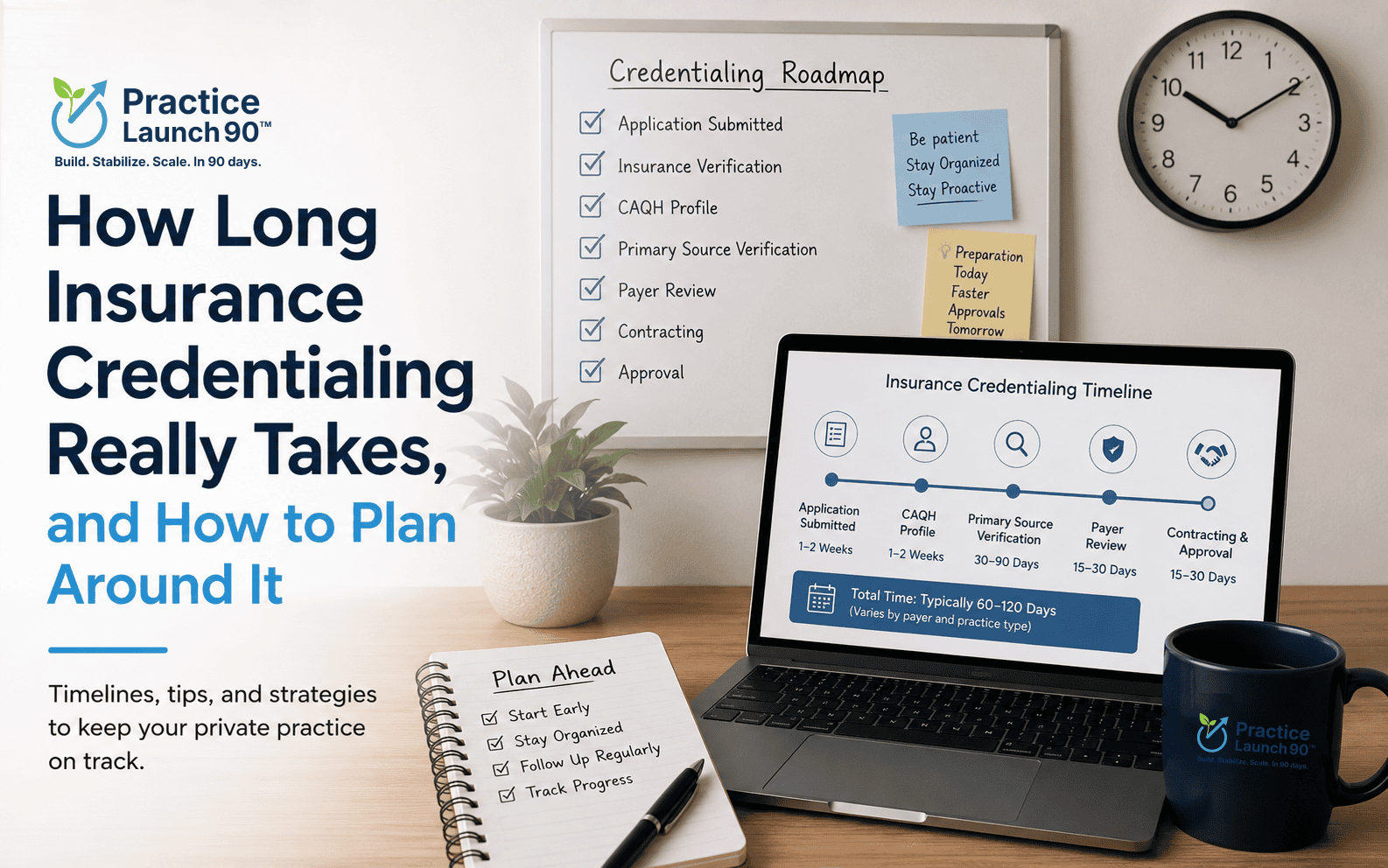
Plan for roughly four to twelve weeks, depending on interfaces, electronic prescribing identity verification, and payer and clearinghouse enrollments. Enrollment is often the slowest part of how to set up billing for a new clinic, so start the EHR decision at least ninety days before your target opening date.
Yes, but migration costs, retraining, and revenue disruption make it expensive. That is why exit terms and data export options belong in your evaluation before you sign, not after. Choosing carefully once is far cheaper than choosing twice.
This framework comes from Practice Launch 90 client engagements and our EHR strategy assessments. Where specific product details matter to your decision, verify them against each vendor’s current published documentation, because pricing, features, and contract language change often.
Disclosure: Practice Launch 90 has a referral partnership with Panova. This article is educational, no vendor reviewed or paid for the framework above, and the mention of Panova reflects that partnership. [Final disclosure wording to be confirmed before publication.]